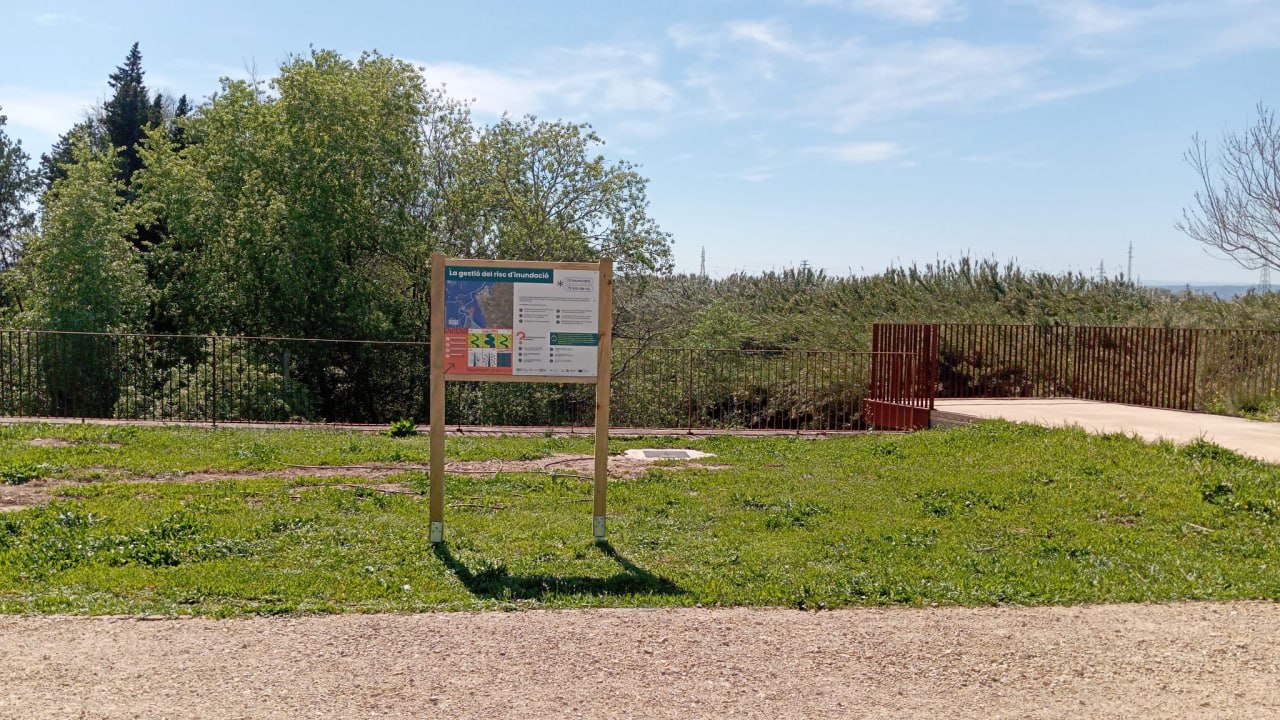
The Consorci de la Ribera and Limne install 15 information panels to raise awareness of flood risk

  • The network of information boards, located at strategic points across the thirteen municipalities involved in the project, provides guidance on how to protect oneself during floods and details the environmental restoration work carried out.
  • The initiative aims to change the public’s perception of the river, linking the recovery of the riparian forest with the region’s resilience to severe weather events.
  • The project is supported by the Fundación Biodiversidad del Ministerio para la Transición Ecológica y el Reto Demográfico (MITECO) as part of the Recovery, Transformation and Resilience Plan (PRTR), funded by the European Union – NextGenerationEU.

30 March 2026.- The Consorci de la Ribera, comprising the Ribera Alta and Ribera Baixa associations of municipalities, and the Fundació Limne have completed the installation of a network of 15 environmental information panels in the municipalities participating in the “Canya a la Canya” project. These displays, situated in public areas close to the project sites but above flood levels, serve as an educational window into risk management and river biodiversity.

Risk culture and self-protection

The content of the panels gives a central role to “flood risk management”. Using maps specific to each locality, residents can visually identify flood-prone areas for return periods of 10, 100 and 500 years. This information is complemented by a practical guide to emergency response, which includes vital advice such as avoiding garages, abandoning your vehicle if the water rises above the axles, or securing toxic substances in high places.

The project’s organisers emphasise that the severity of phenomena such as DANAs, linked to rising sea temperatures, makes it necessary to “rethink the territory” and provide the public with early warning systems and accessible risk maps.

Summary of the ‘Canya a la Canya’ project

The information boards also serve as a public summary of the project’s achievements (2022–2025) along a 75-kilometre stretch of the river. Among the figures available for public consultation are: vegetation restoration through the planting of over 61,600 helophytes, 35,700 shrubs and 1,300 native trees; the removal of invasive species through the mechanical clearing of 172,210 m² of invasive reed (Arundo donax) and the management of 2,120 m² of reed beds; and bioengineering and floodplain management measures that have enabled the stabilisation of 4,830 m² of riverbanks and the conversion of former abandoned farmland into floodplains to reduce the force of floods, providing 27,771 m² of flood resistance capacity.

Furthermore, during the project, great emphasis was placed on public information, with over 400 environmental education activities carried out, involving more than 8,000 people.

A joint commitment to resilience

Both the Consorci de la Ribera and the Fundació Limne emphasise that these panels serve as a link between technical intervention and raising public awareness. The environmental information network has been installed in Sumacàrcer, Antella, Gavarda, Alberic, Benimuslem, Alzira, Algemesí, Albalat de la Ribera, Polinyà de Xúquer, Sueca, Riola, Fortaleny and Cullera.

This project is supported by the Biodiversity Foundation of the Ministry for Ecological Transition and the Demographic Challenge (MITECO) as part of the Recovery, Transformation and Resilience Plan, funded by the European Union – NextGenerationEU.


Categories Tags

The “Canya a la canya” project comes to an end, significantly exceeding its targets for the removal of invasive reed

  • Over the 28 months of the project, 172,210 m² of invasive reed has been removed, exceeding the 142,012 m² initially planned.
  • The “Canya a la canya” project leaves a 75 km green corridor in La Ribera.
  • The project is supported by the Fundación Biodiversidad of the Ministerio para la Transición Ecológica y el Reto Demográfico (MITECO) as part of the Recovery, Transformation and Resilience Plan (PRTR), funded by the European Union – NextGenerationEU.

25 March 2026.– The ‘Canya a la canya’ project has come to an end, having significantly exceeded the objectives set at the outset. Launched in November 2023, it was originally due to conclude in December 2025, but was extended until March 2026 as a result of the effects of the 2024 DANA, which disrupted some of the activities. The project has been implemented by the Consorci de la Ribera, comprising the Ribera Alta and Ribera Baixa associations of municipalities, and the Fundació Limne.

This initiative was launched with the aim of mitigating the risk and impact of flooding by creating a 75-kilometre green corridor along the River Xúquer through a series of objectives: the removal of obstructions; the creation of flood retention areas; the restoration of the riverine environment; the improvement of infrastructure; and the stabilisation of the riverbanks. Work has been carried out in 13 municipalities in the Ribera Alta and Ribera Baixa regions: Sumacàrcer, Antella, Gavarda, Alberic, Benimuslem, Alzira, Algemesí, Albalat de la Ribera, Polinyà de Xúquer, Sueca, Riola, Fortaleny and Cullera. The objectives have been successfully achieved and have far exceeded the initial forecast.

The main action – the removal of Arundo donax – has cleared a total of 172,210 m² of this invasive alien species from the riverbanks. This represents 121.26% of the figure estimated prior to the project, which was 142,012 m². In addition, 63,800 m² of geotextile that was damaged during the 2024 DANA had to be replaced.

The objectives for the management and control of native vegetation have also been exceeded, with the removal of 2,021 m² of reed beds and the management of 63 trees in poor condition and 2,120 m² of shrubs. Furthermore, more than 100,000 native riparian forest species have been planted in the cleared area.

In addition to removing the geotextile used during the “Canya a la canya” project to prevent the reeds from regrowing, more than 30,000 m² of abandoned geotextile from previous projects has been removed in the municipalities of Gavarda, Algemesí and Albalat de la Ribera. This figure once again exceeds the target, which was set at less than 6,000 m².

As for other technical measures, a key initiative has been the conversion of 27,771 m² of agricultural land into riverine habitat in the municipalities of Alberic, Alzira, Polinyà de Xúquer, Sueca and Cullera. In the first and last of these towns, this work has been made possible thanks to stewardship agreements with private landowners. Finally, 1,651 m² of bank stabilisation and backfilling has been carried out in Alzira, using the Krainer wall technique, and in Cullera, where a breakwater wall has been constructed.

The project has also carried out cross-cutting governance and participation initiatives, such as the creation of the Xúquer River Advisory Council, involving the Consorci de la Ribera, the Fundació Limne and local councils, as well as private individuals and organisations. Furthermore, 15 environmental information panels have been installed at various points along the river, and over 400 environmental education activities have been carried out, involving more than 8,000 people. These have given the public the opportunity to take part in meetings, community planting days, school workshops, conferences and interpretive trails.

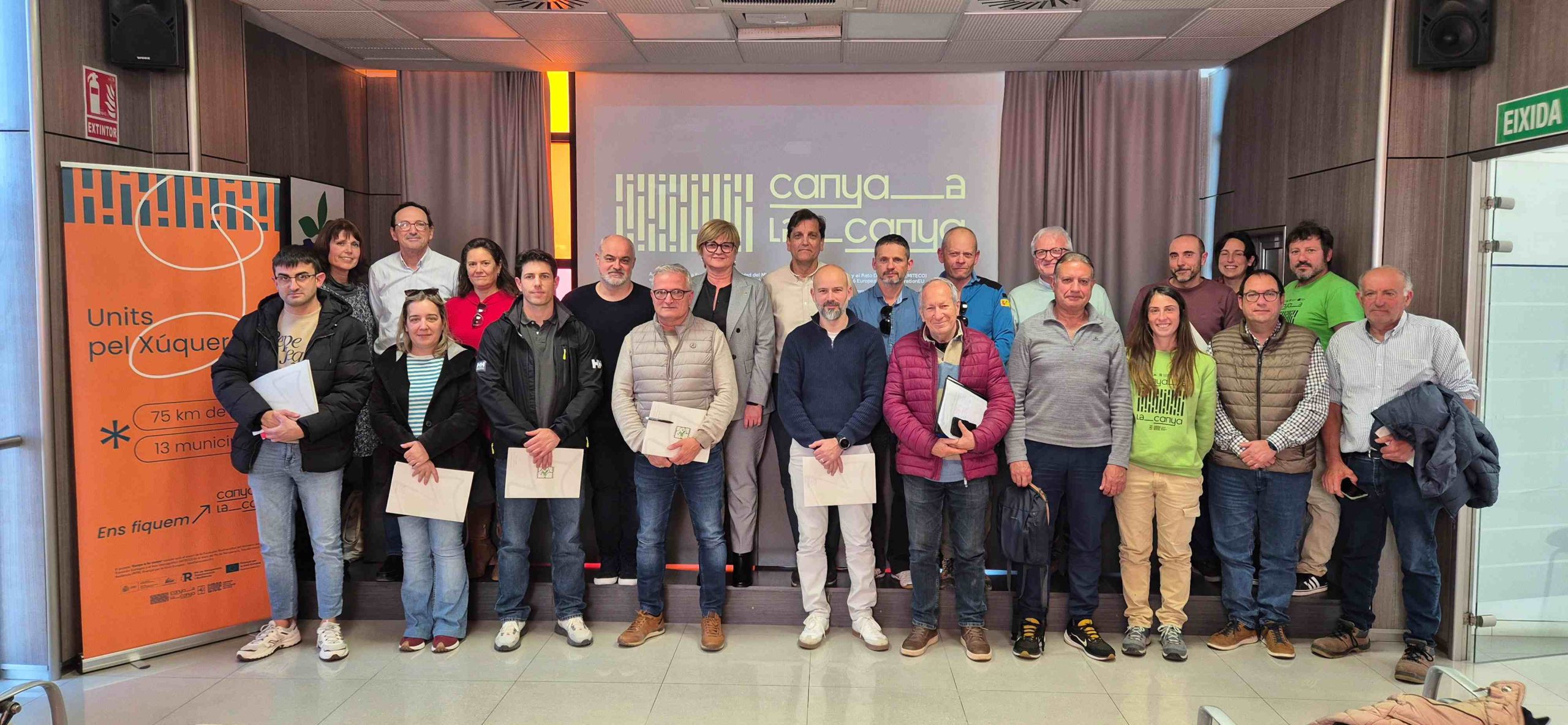
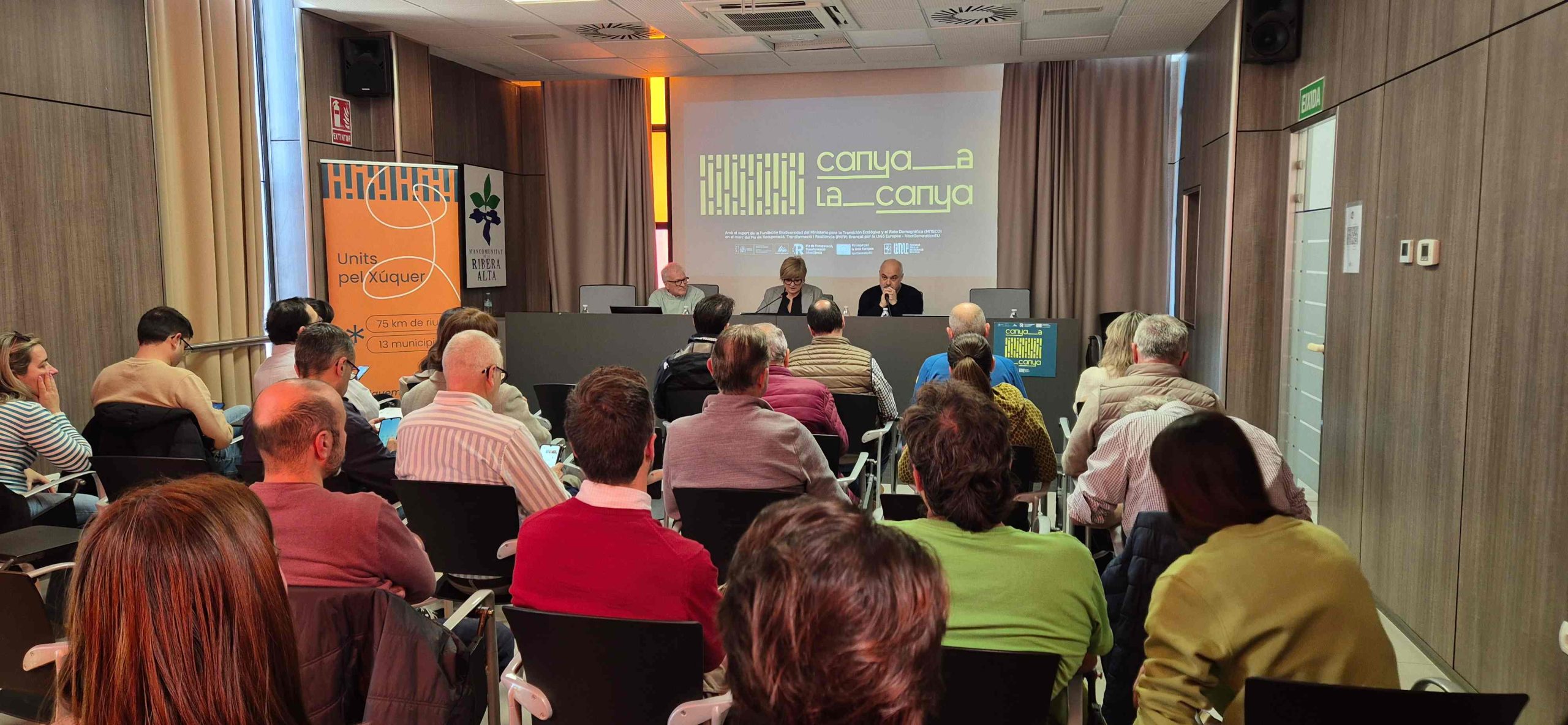
To round things off, “Canya a la canya” opened its doors to local councils and the public for a closing event to mark the end of the project, during which an assessment was made of the actions carried out – which can be considered a success, as they met and exceeded expectations. Furthermore, it has prompted reflection on the need to build on the actions carried out with new initiatives that help to continue improving the environment of the River Xúquer and preventing the risk of flooding.

The “Canya a la canya” project is supported by the Fundación Biodiversidad of the Ministerio para la Transición Ecológica y el Reto Demográfico (MITECO) as part of the Recovery, Transformation and Resilience Plan (PRTR), funded by the European Union – NextGenerationEU.

Categories Tags

The Consorci de la Ribera and Limne present a roadmap to safeguard the conservation of the Xúquer at municipal level

  • A comprehensive legal report, drawn up as part of the “Canya a la Canya” project, defines local powers to turn river restoration into stable public policy.
  • The document has been presented to the newly established Advisory Council as the key tool for coordinating the management of urban watercourses, the fight against invasive species and sustainable public use.
  • The project is supported by the Fundación Biodiversidad of the Ministerio para la Transición Ecológica y el Reto Demográfico (MITECO) as part of the Recovery, Transformation and Resilience Plan (PRTR), funded by the European Union – NextGenerationEU.

24 March 2026.- Following the recent establishment of the Advisory Council for the promotion and conservation of river ecosystems, the Consorci de la Ribera, comprising the Ribera Alta and Ribera Baixa associations of municipalities, and the Fundació Limne have presented a pioneering legal report that clarifies and strengthens the role of local councils in the protection of the River Xúquer.

The report, drafted by experts in administrative and environmental law under the umbrella of the “Canya a la Canya” project, has a clear objective: to ensure that restoration actions are not isolated interventions, but are consolidated as part of the routine and planned management of each municipality.

A legal framework for local councils

Historically, the complexity of responsibilities within the public water domain has created uncertainty in local management. The new report presented by the Consorci and Limne clears up these doubts, emphasising that the Framework Law on Local Government and the recent reforms to the Public Water Domain Regulations fully empower local councils to take action on their urban sections. “We want every local council to have a clear roadmap, backed by legal certainty, to maintain what has been restored”, says Toni Barea Olmos, president of the Consorci de La Ribera.

The document highlights several key points, such as the possibility for local councils to implement multi-year maintenance programmes for selective cleaning and the control of invasive species (such as the well-known invasive reed Arundo donax) without constant authorisations, provided they have a favourable report from the Júcar River Basin Authority; the need to integrate the river into the municipalities’ General Urban Development Plans (PGOU), promoting Green Urban Planning that protects ecological corridors from human pressure and the urbanisation of floodplains; and the identification of the Municipal Natural Area as the ideal framework in the Valencian Community for local councils to lead the active conservation of their natural heritage.

Shared governance and stewardship of the territory

In its legal report, the Consorci de la Ribera y Limne places particular emphasis on the fact that the health of the Xúquer depends on cooperative governance. The Consorci reaffirms its role as the ideal vehicle for coordinating shared services, optimising costs and providing technical and legal assistance to local councils.

Furthermore, the report advocates for public-social collaboration, positioning the stewardship of the territory as a strategic approach. This model enables civil society organisations and local councils to sign agreements for ecological monitoring and public awareness-raising, ensuring that the local community feels jointly responsible for the care of their river.

About the Canya a la Canya project

The Canya a la Canya project, running from 2022 to 2026, has focused on creating a major green corridor between Sumacàrcer and Cullera, centred on the restoration of native biodiversity and the reduction of flood risk. The initiative has been supported by the Fundación Biodiversidad of the Ministerio para la Transición Ecológica y el Reto Demográfico (MITECO), as part of the Recovery, Transformation and Resilience Plan, funded by the European Union – NextGenerationEU.

Report on the local regulatory framework for green infrastructure

Skip to content