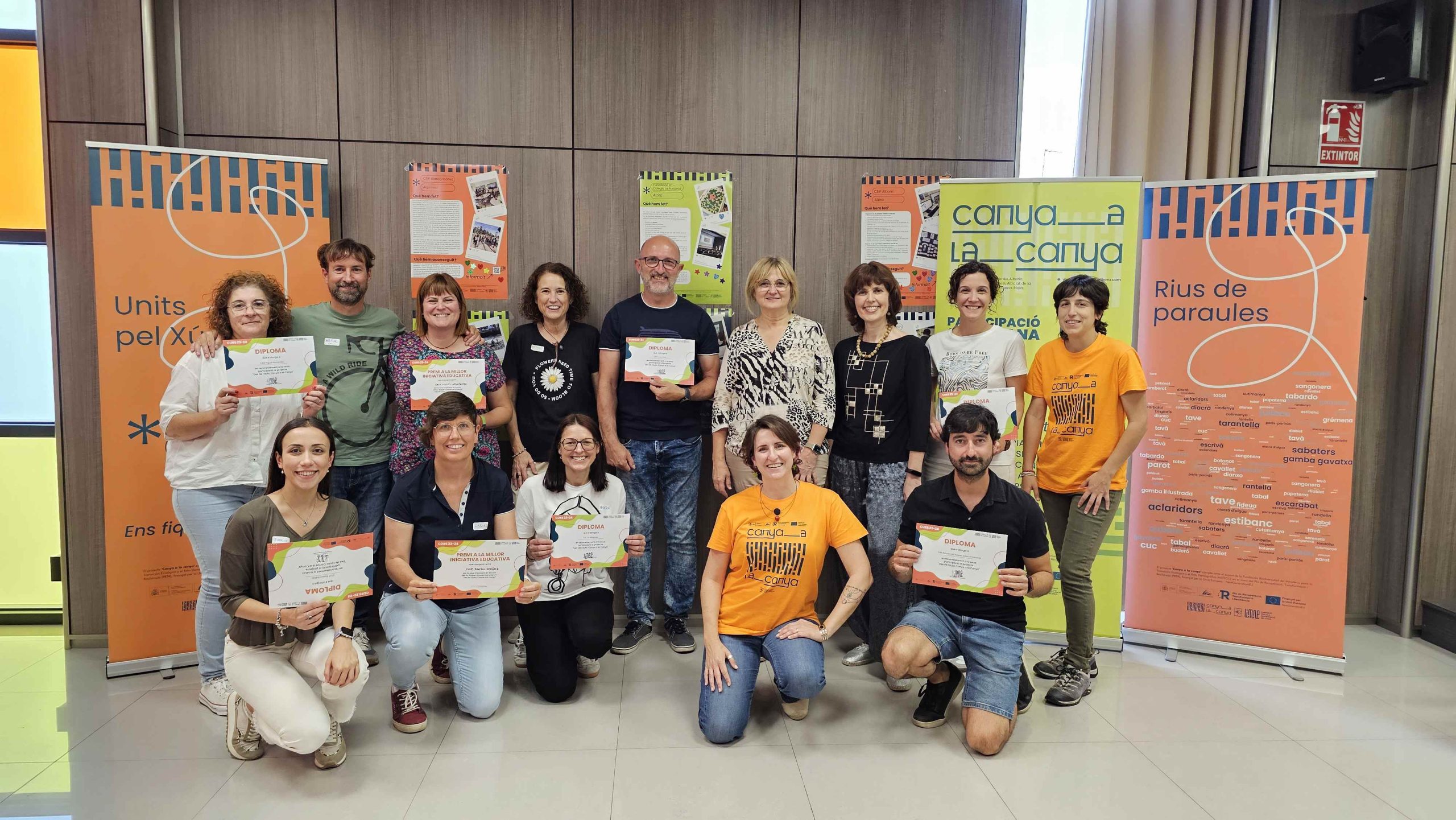
Twenty-eight schools in La Ribera present educational projects linked to the Xúquer

  • The Environmental Education programme helps to raise environmental awareness among students, which leads to a better understanding of water resources and more sustainable behaviour.
  • The actions are part of the ambitious ‘Canya a la canya’ plan, developed by the Consorci de la Ribera and Fundació Limne in 13 municipalities.
  • The actions are supported by the Fundación Biodiversidad of the Ministerio para la Transición Ecológica y el Reto Demográfico (MITECO) within the framework of the Recovery, Transformation and Resilience Plan (PRTR), financed by the European Union – NextGenerationEU.

31 May 2024.- The ‘Canya a la Canya’ project, coordinated by the Consorci de la Ribera and the Fundació Limne, reiterates its commitment to environmental education as one of the pillars for raising awareness of the aquatic environment and its ecosystem, making society aware of the problems threatening the Xúquer, such as the presence of invasive species or climate change, and providing keys and mechanisms for its conservation and improvement.

With the aim of strengthening training in environmental issues, the ‘Canya a la Canya’ team presented an Environmental Education Toolkit at the beginning of the school year, the guidelines of which have been implemented during this semester.

The aim of the guide was to provide teachers with reference materials on how to integrate river-related topics and concepts into formal and informal education systems. Under the umbrella of this guide and the educational workshops offered by the Canya a la Canya project, schools in La Ribera have developed several proposals addressing issues such as climate change, drought, flood risks, biodiversity, solid waste and ecosystem restoration, among others.

In addition, the workshop proposals encouraged students to leave the classroom and visit the natural environments of the municipalities where the campaign is being implemented, so that they could acquire practical knowledge and environmental awareness about protecting our environment, both in terms of water resources and the environment itself, as well as the history and culture that connects us to the Xúquer.
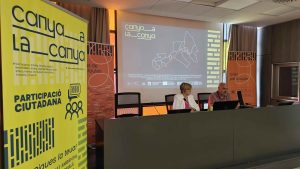
Presentation of results

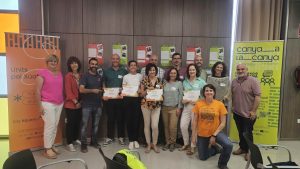
Over the past week, two meetings were held (one focused on primary education and the other on secondary education), at which teachers from the twenty-eight participating schools presented their proposals and results through oral presentations and posters, which were then voted on by the attendees themselves and by the project’s technical team, with the aim of rewarding the most innovative educational experiences.

‘In this first edition of the campaign, we have given a positive assessment to the most cross-curricular proposals’, says Sales Tomàs, director of the Limne Foundation, ‘highlighting those schools that have managed to involve a wider range of subjects in their educational proposal on the Xúquer’.

On behalf of the Consorci de la Ribera, Paqui Momparler Orta and Óscar Navarro Torres emphasise that ‘rivers cross different landscapes and cultures, which is why we believe that environmental education must imitate them and consolidate these cross-cutting projects as an element of educational transformation’.

This educational proposal from the ‘Canya a la canya’ project benefits from a call for grants, promoted by the Fundación Biodiversidad of the Ministerio para la Transición Ecológica y el Reto Demográfico (MITECO)), for the restoration of river ecosystems and the reduction of flood risk in urban environments, within the framework of the Recovery, Transformation and Resilience Plan (PRTR) financed by the European Union – NextGenerationEU.
Categories Tags

Visit to the activities of the Canya a la canya project in the municipalities of Sueca, Riola and Fortaleny

  • The ‘Canya a la canya’ project is supported by the Fundación Biodiversidad of the Ministerio para la Transición Ecológica y el Reto Demográfico (MITECO) within the framework of the Recovery, Transformation and Resilience Plan (PRTR), funded by the European Union – NextGenerationEU.

8 May 2024.- The mayor of Sueca, Dimas Vázquez, and the mayor of Fortaleny, Antonio Sellés, inspected the area covered by the Canya a la canya project in their municipalities, accompanied by the president of the Consorci de la Ribera, Josep Mur Díaz-Hellín.

The Consorci de la Ribera, an entity formed by the Mancomunitat de la Ribera Alta and the Mancomunitat de la Ribera Baixa, was also represented by the president of the Mancomunitat de la Ribera Alta, Paqui Momparler Orta, and the vice-president of the Consorci de la Ribera, Toni Barea. Also present were Paqui Oltra, representing the Riola Town Council, and the councillor for the environment of the Sueca Town Council, Angela Marí.

During the visit to the area of action, technicians from the Canya a la canya project gave a technical explanation of the actions to the authorities and contextualised them within the overall project. Representatives of the Limne Foundation explained the communication, training and citizen participation actions planned for the project.

In this phase, the aerial part of the common reed (Arundo donax L.) will be cleared, and then a completely opaque covering will be placed manually, which will later be monitored and removed.

The clearing and covering with subsequent planting corresponds to an area of approximately 15,000 m² in Riola, approximately 10,000 m² in Fortaleny and 7,000 m² of total removal without covering in these three municipalities, and in Sueca, approximately 18,000 m² and approximately 3,500 m² of transformation of cultivated areas into river space.

The ultimate goal, in addition to the environmental restoration of the area, is to enhance the value of the Xúquer and bring this highly valuable space closer to the public. That is why the project also includes public awareness and education activities developed by the Limne Foundation.

The Consorci de la Ribera and the Limne Foundation have announced the creation of a large green corridor between Sumacàrcer and the sea, focused on the conservation and improvement of the Xúquer River through actions to manage and control invasive species, recover native vegetation, removal of obstructive material, transformation of abandoned farmland to create natural river space, and stabilisation and setbacks of riverbanks.

The actions designed for this large green corridor cover an area of 124,358 m² along 75 km of the Xúquer River as it passes through the municipalities of Sumacàrcer, Antella, Gavarda, Castelló, Alberic, Benimuslem, Alzira, Algemesí, Albalat de la Ribera, Polinyà de Xúquer, Sueca, Riola, Fortaleny and Cullera.

The Limne Foundation has mobilised almost 300 citizens in the project’s participatory activities and hopes to involve 29 schools by the end of the educational campaign, which means 7,500 schoolchildren will be involved in the project.

EUROPEAN FUNDS

The project presented by the Consorci de la Ribera and Limne, called ‘Canya a la canya’, has been awarded €3,747,949.03 in a call for grants promoted by the Fundación Biodiversidad of the Ministerio para la Transición Ecológica y el Reto Demográfico (MITECO) for the restoration of river ecosystems and the reduction of flood risk in urban environments, within the framework of the Recovery, Transformation and Resilience Plan (PRTR) financed by the European Union – NextGenerationEU.

The call, which received a total of 230 proposals, has selected 37 projects, including ‘Canya a la canya’, which presents initiatives that promote nature-based solutions that, in addition to restoring and increasing the biodiversity and environmental values of the Xúquer, contribute significantly to reducing flood risks in its urban sections. In addition, the project aims to raise awareness among the population of the importance of river restoration as a tool for reducing the impact of flooding and to transfer the knowledge acquired to other municipalities with similar problems, so that the benefits of the initiative can be multiplied.

Categories Tags

Visit to the activities of the Canya a la Canya project as it passes through the municipality of Albalat de la Ribera

  • The ‘Canya a la canya’ project is supported by the Fundación Biodiversidad del Ministerio para la Transición Ecológica y el Reto Demográfico (MITECO) within the framework of the Recovery, Transformation and Resilience Plan (PRTR), funded by the European Union – NextGenerationEU.

2 May 2024.- The mayor of Albalat de la Ribera, Jose Antonio Roig Ferrer, and the president of the Consorci de la Ribera, Josep Mur Díaz-Hellín, visited the works being carried out as part of the Canya a la canya project in the municipality of Albalat de la Ribera, accompanied by the president of the Mancomunitat de la Ribera Baixa, Manuela Egea Moreno, and the president of the Mancomunitat de la Ribera Alta, Paqui Momparler Orta. The event was also attended by Albalat de la Ribera councillors Josep Sala, councillor for trade, youth, festivals and communication, and Nuria Sarrió, councillor for culture, heritage and historical memory, as well as the councillor for the environment of Sueca Town Council, Angela Marí.

During the visit to the area of action, technicians from the Canya a la canya project gave a technical explanation of the actions to the authorities and contextualised them within the overall project. Representatives of the Fundació Limne explained the actions planned in the project in terms of communication, training and citizen participation.

In order to achieve the main objective of this project, a total of six actions have been defined, which bring together a series of measures focused on this goal. In the case of the municipality of Albalat de la Ribera, two of these actions are currently being carried out.

The first action is the management and control of invasive alien species, eliminating existing invasive species in the areas of action, with the main target species being giant reed (Arundo donax L.). To this end, depending on the zoning carried out according to the characteristics of the terrain and the feasibility of implementation, the methods of elimination will be elimination by shading, following the procedure of mowing, covering, monitoring and removing the covering, and elimination by extracting the rhizome.

The second action to be carried out in Albalat de la Ribera is the removal of abandoned geotextile, removing the geotextile installed in previous reed bed management operations which, for one reason or another, has not been removed and is currently buried or semi-buried in different locations.

The ultimate goal, in addition to the environmental restoration of the area, is to enhance the value of the Xúquer and bring this highly valuable space closer to the public. That is why the project also includes public awareness and education activities developed by the Limne Foundation.

The Consorci de la Ribera and the Fundació Limne have announced the creation of a large green corridor between Sumacàrcer and the sea, focused on the conservation and improvement of the Xúquer River through actions to manage and control invasive species, restore native vegetation, removal of obstructive material, transformation of abandoned farmland to create natural river space, and stabilisation and setbacks of riverbanks.

The actions designed for this large green corridor cover an area of 124,358 m² along 75 km of the Xúquer River as it passes through the municipalities of Sumacàrcer, Antella, Gavarda, Castelló, Alberic, Benimuslem, Alzira, Algemesí, Albalat de la Ribera, Polinyà de Xúquer, Sueca, Riola, Fortaleny and Cullera.

The Limne Foundation has mobilised almost 300 citizens in the project’s participatory activities and expects to involve 29 schools by the end of the educational campaign, which means 7,500 schoolchildren will be involved in the project.

EUROPEAN FUNDS

The project presented by the Consorci de la Ribera and Limne, called ‘Canya a la canya’, has been awarded €3,747,949.03 in a call for grants promoted by the Fundación Biodiversidad of theMinisterio para la Transición Ecológica y el Reto Demográfico (MITECO), for the restoration of river ecosystems and the reduction of flood risk in urban environments, within the framework of the Recovery, Transformation and Resilience Plan (PRTR) financed by the European Union – NextGenerationEU.

The call, which received a total of 230 proposals, has selected 37 projects, including ‘Canya a la canya’, which presents initiatives that promote nature-based solutions that, in addition to restoring and increasing the biodiversity and environmental values of the Xúquer, contribute significantly to reducing flood risks in its urban sections. In addition, the project aims to raise awareness among the population of the importance of river restoration as a tool for reducing the impact of flooding and to transfer the knowledge acquired to other municipalities with similar problems, so that the benefits of the initiative can be multiplied.


Skip to content